Breathing Exercises for Anxiety Attacks: Quick Digital Guide
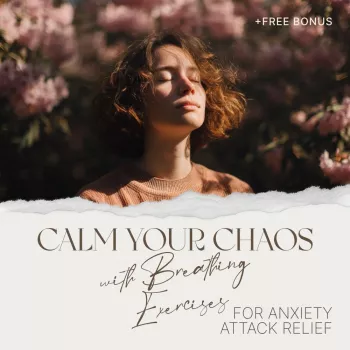
Calm Your Chaos: Breathing Exercises for Anxiety Attack Relief (Digital Guide)
When anxiety spikes fast, the body often needs a simple, immediate signal that it’s safe. Guided breathing can lower intensity by slowing respiration, easing muscle tension, and giving the mind a steady rhythm to follow. This guide-centered approach focuses on practical techniques that work in real moments—at home, at work, in the car (parked), or before sleep—plus a quick plan for choosing the right exercise when panic symptoms hit.
Why breathing helps when anxiety surges
During an anxiety surge, the body can slide into fast, shallow breathing that unintentionally ramps symptoms up. Dizziness, chest tightness, tingling, and a sense of “I can’t get enough air” can all intensify when the breath becomes quick and high in the chest.
- Fast, shallow breathing can amplify symptoms such as dizziness, chest tightness, and tingling; slowing the breath can reduce that feedback loop.
- Longer exhales tend to support relaxation by shifting the body toward a calmer state.
- Breathing patterns add structure during spiraling thoughts: a count, a pace, and a clear next step.
- Breathing isn’t a cure-all; it’s a rapid tool for lowering intensity so other supports (grounding, hydration, rest, reaching out) become easier.
For more context on panic symptoms and treatment options, see the National Institute of Mental Health (NIMH) overview of panic disorder. For practical breathing basics, the American Psychological Association (APA) guidance on breathing exercises is also helpful.
Instant “pick-a-breath” plan for the first 2 minutes
When panic symptoms hit, decision fatigue is real. Use this quick matching approach: pick one pattern that fits what’s happening, then repeat it for 60–120 seconds without trying to “perfect” it.
- If breathing feels too fast: try an exhale-led pattern (e.g., inhale 4, exhale 6) for 6–10 cycles.
- If dizziness or tingling shows up: slow gently and reduce depth; aim for a soft, quiet breath rather than a big inhale.
- If thoughts are racing: use a counted box (4–4–4–4) to occupy attention and stabilize rhythm.
- If chest feels tight: switch to pursed-lip exhale (inhale through nose, exhale through lightly pursed lips) to extend exhale without strain.
- If panic is peaking: focus only on one action—feel feet, relax shoulders, and exhale longer than inhale.
Quick match: symptom → breathing choice
| What’s happening | Try this | How long | Helpful cue |
|---|---|---|---|
| Breathing is rapid or shallow | Inhale 4, exhale 6 | 1–2 minutes | Keep the exhale smooth and unforced |
| Dizziness/tingling | Gentle nasal breathing + smaller breaths | 1–3 minutes | Quiet breath; slow the pace first |
| Racing thoughts | Box breathing (4–4–4–4) | 1–2 minutes | Count the corners: in, hold, out, hold |
| Chest tightness | Pursed-lip breathing | 2–5 minutes | Exhale like cooling soup |
| Feeling “frozen” or detached | 3-3-6 with grounding (name 3 things) | 1–3 minutes | Look around while exhaling longer |
Core breathing exercises to practice (and use in the moment)
Extended exhale breathing (4–6)
Inhale through the nose for 4, then exhale for 6. Repeat 6–10 cycles. Keep the exhale easy—think “longer,” not “harder.”
Box breathing (4–4–4–4)
Inhale 4, hold 4, exhale 4, hold 4. Repeat for 4 rounds. If breath holds feel stressful, reduce counts to 3 or skip holds entirely and return to an exhale-led pattern. (For a deeper explanation of the method, see the Cleveland Clinic overview of box breathing.)
Physiological sigh (2-part inhale + long exhale)
Inhale through the nose, add a second short “sip” of air, then exhale slowly through the mouth. Repeat up to 3 times, then return to gentle nasal breathing. This is meant to be brief—overdoing it can feel activating for some people.
Pursed-lip breathing
Inhale through the nose for 2–4, then exhale through lightly pursed lips for 4–8. Keep cheeks relaxed and avoid forcing air out; the lips simply help lengthen the exhale.
“Breath + release” scan
Make it easier when anxiety hits: setup, posture, and pacing
Using a digital guide during real-life moments
When to get extra support
Digital download: Calm Your Chaos with Breathing Exercises for Anxiety Attack Relief
If a clear, structured plan makes it easier to follow through, Calm Your Chaos with Breathing Exercises for Anxiety Attack Relief: A Digital Guide for Instant Anxiety Relief is designed for rapid use during anxious moments and for daily practice. It focuses on a small set of practical options so choosing feels doable even when your brain is loud.
Product snapshot
| Item | Format | Best for | Price |
|---|---|---|---|
| Calm Your Chaos with Breathing Exercises for Anxiety Attack Relief | Digital guide | Quick, structured breathing support during anxiety spikes | $8.99 |
If anxiety spikes often show up alongside parenting stress or household tension, pairing breathing with communication tools can make daily life feel more manageable. Consider the Positive Parenting Tips Guide | Gentle Parenting eBook | Empathic Communication | Digital Download for Moms & Dads as a complementary resource for calmer routines and steadier responses during stressful moments.
FAQ
What is the best breathing exercise during an anxiety attack?
Extended exhale breathing (inhale 4, exhale 6) is a strong first pick because it’s simple and naturally slows the system down. If dizziness shows up, make the breath smaller and quieter; if thoughts are racing, box breathing can provide a steadier rhythm.
Can breathing exercises stop a panic attack fast?
They can often reduce intensity within a few minutes and help symptoms pass more smoothly, but results aren’t always instant. Regular practice helps, and pairing breathing with grounding and lowering stimulation can make it more effective.
Why do I feel dizzy when I try deep breathing?
Some people get lightheaded when they inhale too deeply or too quickly, which can feel like over-breathing. Try slowing the pace first, reducing depth, breathing through the nose, and keeping the exhale longer and gentle; seek medical advice if dizziness is severe, new, or concerning.










Leave a comment